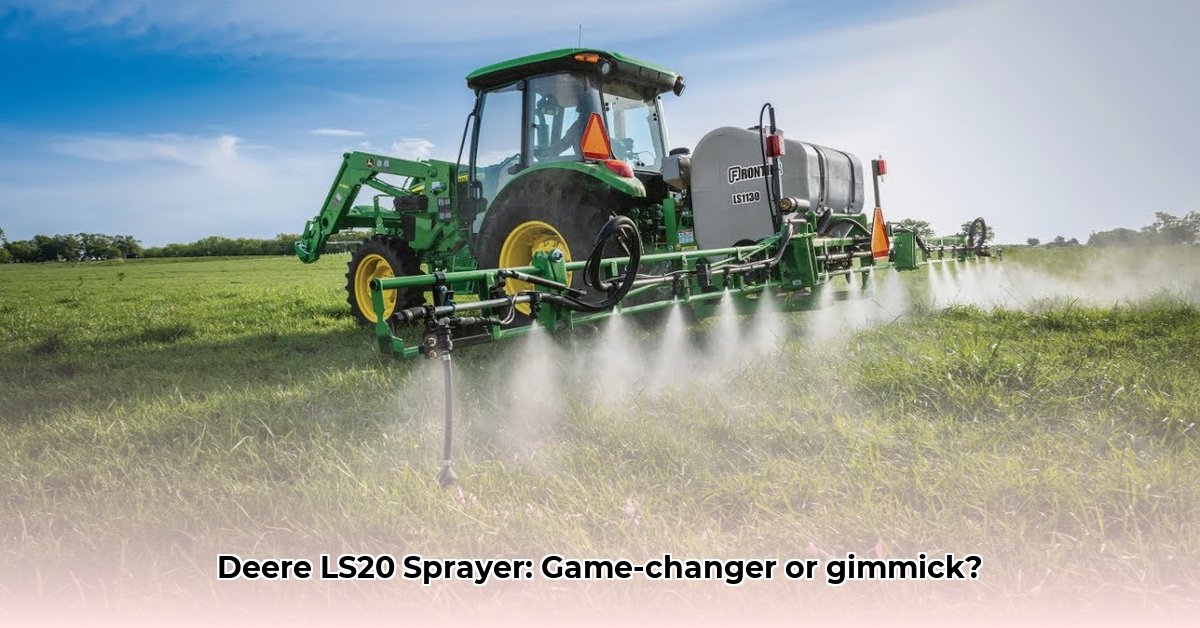
Tractor Sprayer Attachment: Deere LS20 Series Deep Dive
Thinking about upgrading your spraying operation? This detailed review examines the Deere LS20 series tractor sprayer attachments, helping you determine if it's the right fit for your farm. We'll explore its features, benefits, drawbacks, and provide actionable steps to maximize your investment. We will also cover long-term maintenance and cost considerations to inform your decision-making process. For more compact options, see compact tractor sprayers.
A Sprayer That's Built to Order: Modular Design
The LS20 series emphasizes flexibility. Its modular design allows customization to suit various farm sizes and spraying needs. Need a large tank for expansive fields? Choose the 150-gallon option. Working with smaller plots? Smaller tanks and shorter booms are readily available. This adaptability is a significant advantage. Furthermore, iMatch™ compatibility simplifies setup, significantly improving ease of use.
Powering Up: Electric vs. PTO Pumps – What's the Right Choice?
Choosing between electric and PTO (power take-off) pumps is crucial. Electric pumps offer convenience and simplicity. PTO pumps, however, deliver superior power, ideal for large-scale spraying operations. Larger farms might prioritize the PTO pump's higher flow rate for efficient, high-volume spraying, while smaller operations might value the ease of use of the electric pump. However, more comparative data on long-term fuel efficiency and maintenance costs is needed for a definitive recommendation. Have you considered the long-term impact of different pump options on your operational budget?
Spraying with Precision: Nozzle Selection and Accuracy
The LS20 utilizes TeeJet® nozzles, renowned for quality and consistency. However, independent verification of spray accuracy across various boom lengths and nozzle configurations is essential. Precise spraying is crucial for efficient chemical use, minimizing environmental impact. What is the effectiveness of the nozzles in ensuring even distribution across different field conditions?
Weighing the Pros and Cons: Deere LS20 Series Sprayer Attachment
The following table summarizes the advantages and disadvantages of the Deere LS20 series:
| Feature | Pros | Cons |
|---|---|---|
| Modular Design | Highly customizable; easy setup via iMatch™. | Numerous options might initially feel overwhelming. |
| Tank Capacity Options | Wide range (45-150 gallons) caters to diverse needs. | Requires careful consideration to select the optimal tank size for specific farm operations. |
| Pump Options (Electric/PTO) | Offers convenience (electric) and power (PTO); choose based on operational requirements. | Comprehensive data on long-term reliability and operating costs for both pump types is currently lacking. |
| TeeJet® Nozzles | High-quality, reliable, and standardized components. | Independent verification of spray accuracy and uniformity across different boom/nozzle configurations is needed. |
The Long Haul: Maintenance and Lifespan
More information on the LS20's lifespan and associated maintenance costs is crucial for long-term budget planning. Preventative maintenance is key to minimizing costly repairs. What is the projected lifespan of key components like the pump and boom under typical usage conditions?
Right-Sizing for Your Farm
Smaller farms may find smaller tanks and electric pumps ideal, prioritizing convenience and lower initial costs. Larger operations might benefit from the increased power of PTO pumps and larger tank capacities for quicker spraying. Careful assessment of your farm's scale is crucial.
Environmental Impact: A Responsible Approach
Minimizing chemical drift is environmentally responsible. While boomless options can reduce drift, further data on chemical and water usage, along with potential for drift, is needed. Understanding pesticide application regulations is both a legal and environmental imperative. How does the LS20 contribute to sustainable agricultural practices?
Looking Ahead: Suggestions for Deere
To enhance the product's appeal, independent testing verifying spray accuracy, efficiency across all models, and lifecycle costs would be beneficial. Comprehensive maintenance manuals and training resources would minimize downtime and reduce maintenance expenses.
Comparing Deere LS20 Sprayer Pump Options for Long-Term Cost Effectiveness
Three Pivotal Points:
- The LS20's versatility in tank size, pump type, and boom configuration impacts operational efficiency.
- The choice between electric and PTO pumps significantly influences long-term operating costs.
- Insufficient manufacturer data on pump lifespan and maintenance hinders accurate long-term cost analysis.
Understanding Your Options: Electric vs. PTO Pumps
The pump selection—electric diaphragm or PTO—is critical. Electric pumps offer user-friendly operation, while PTO pumps provide higher power and flow rates. However, a detailed cost-benefit analysis considering factors like electricity costs versus fuel consumption, and long-term maintenance expenses, is needed for informed decision-making. What are the projected maintenance costs for each pump type over a five-year period?
Analyzing Long-Term Costs: Factors Beyond Initial Price
Long-term cost-effectiveness involves evaluating multiple factors beyond the initial purchase price. Maintenance intervals, repair costs, and the lifespan of pump components are all critical considerations in a comprehensive cost analysis.
Data Gaps and the Need for Independent Analysis
The limited manufacturer data on pump efficiency and lifespan necessitates independent testing and user feedback to inform crucial purchasing decisions. Farmers should actively seek out real-world user experiences to supplement manufacturer data.